In an FRP vessel, the glass carries the load and the resin keeps the chemical out. Choose the glass badly and the vessel is weak. Choose the resin badly and it is strong for a while — then it softens, blisters and weeps from the inside, usually years before anyone expected.
Resin selection is the single biggest decision in a corrosion-resistant vessel. Here is how the main options compare, and how to choose between them.
The options, from general-purpose to most resistant
| Option | Good for | Watch out for |
|---|---|---|
| Isophthalic polyester | Water, salts, dilute acids at moderate temperature | Strong alkalis, oxidisers, solvents, heat |
| Bisphenol-A fumarate polyester | Wider acid and alkali resistance than isophthalic | Less tough; limited with solvents |
| Epoxy vinyl ester | Strong acids, alkalis and many oxidising services; the industry workhorse | Some solvents; temperature limits vary by chemical |
| Novolac vinyl ester | Higher temperatures, solvents, hot acid gases | More brittle; less forgiving of cyclic and thermal shock |
| Chlorendic polyester | Hot, strongly oxidising mineral acids | Poor with alkalis; specialist use |
| Thermoplastic liner (PP, PVC, CPVC, PVDF) bonded to FRP | Chemistry no resin can survive on its own | Each liner has a hard temperature limit; bonding and fabrication quality are critical |
Temperature limits are deliberately left out of this table. A resin rated for 100 °C in one chemical may be limited to 60 °C in another. The only reliable limit is the one in the resin manufacturer's data for your specific chemical and concentration.
Isophthalic polyester — the economical baseline
Isophthalic resins are the entry point for corrosion-resistant FRP. They handle water, brines and dilute acids well at moderate temperatures, and they cost the least.
The trouble starts when the service pushes beyond that. Strong alkalis attack polyester chemistry directly, oxidisers degrade it, and resistance falls off quickly as temperature climbs. Isophthalic resin is perfectly good in the right job — but it is the resin most often found in vessels that failed early, because it was chosen on price for a service that needed more.
Epoxy vinyl ester — the default for most chemical duty
If one resin family runs the corrosion-resistant FRP industry, it is epoxy vinyl ester. It combines strong resistance to acids and alkalis with something isophthalic lacks: toughness. Vinyl esters stretch further before they crack, so they tolerate thermal cycling, vibration and pressure fluctuation far better.
That toughness matters more than it sounds. Plenty of vessels are lost not to steady chemical attack, but to a crack opening during a temperature swing and letting the chemical in behind the barrier. For hydrochloric and sulphuric acid storage, most scrubber duties and caustic service, epoxy vinyl ester is usually where we start.
Novolac vinyl ester — for heat and solvents
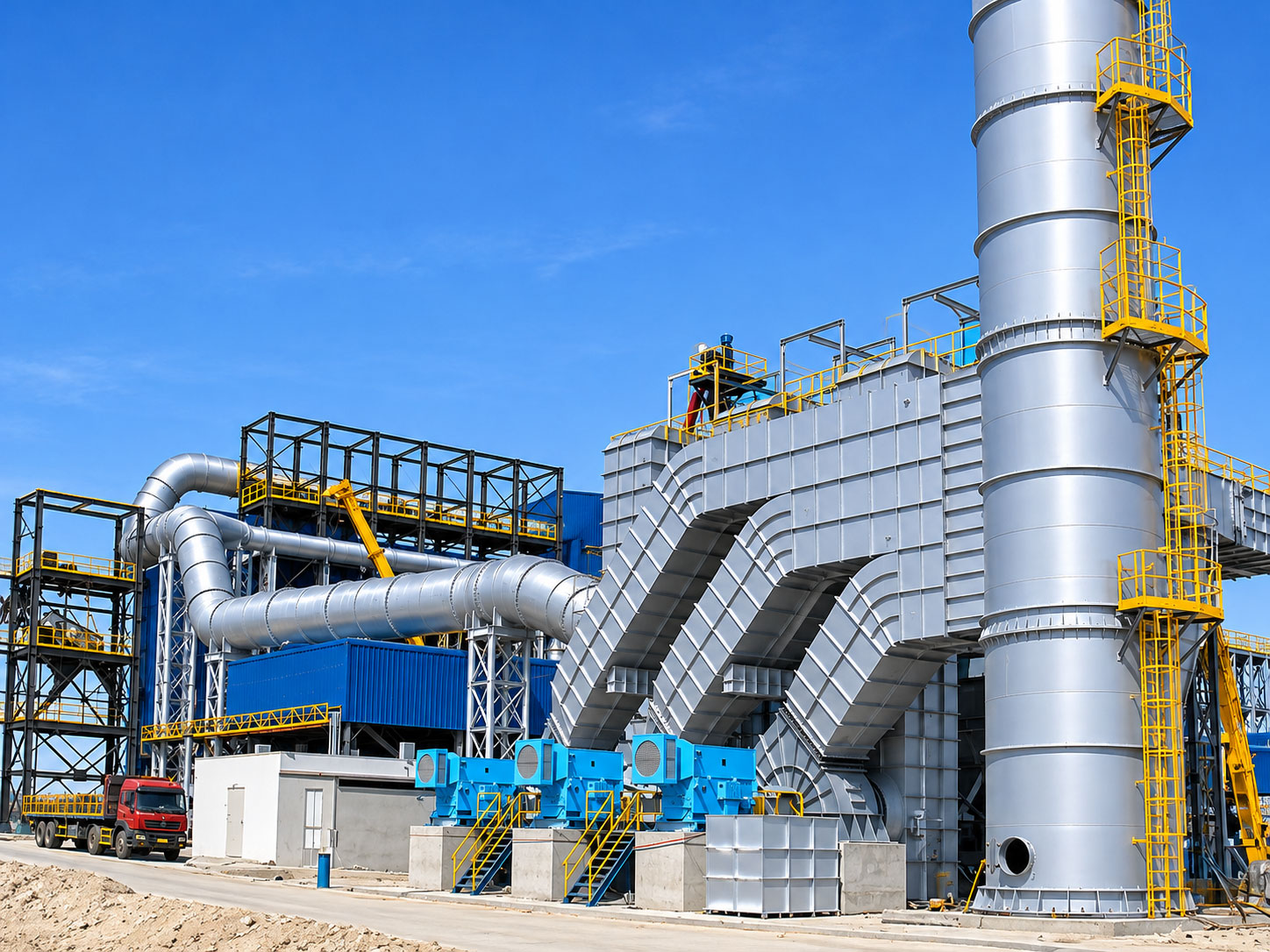
Novolac vinyl esters raise the ceiling on both temperature and solvent resistance. They are the usual choice for hot flue gas and acid gas duty — scrubber inlets, quench zones and flue gas desulphurisation equipment, where gas can arrive well above 100 °C.
The trade-off is brittleness. Novolac resins are less tough than standard vinyl esters, so they suit steady hot service better than equipment that cycles hard. A good design often uses both: novolac where the heat is, epoxy vinyl ester elsewhere. On a 165,000 CMH flue gas desulphurisation system we supplied, handling gas at 120–130 °C, that is exactly the split we used.
When to stop asking the resin to do it alone
Some chemicals defeat every resin, or sit right at the edge of what one can handle. That is when a thermoplastic liner earns its cost: a welded thermoplastic sheet does the chemical resisting, and FRP bonded behind it provides the structural strength. This is dual-laminate construction.
- Polypropylene (PP) — broad resistance to acids and alkalis at moderate temperatures; not for strong oxidisers or aromatic solvents
- PVC and CPVC — good with chlorine-bearing and hypochlorite services at lower temperatures, CPVC reaching higher than PVC
- PVDF — the premium choice for the most aggressive service: strong oxidisers, chlorine, bromine, hydrofluoric acid and high-purity duty, at higher temperatures than the other liners
A liner is not a cure-all. Each thermoplastic has a firm temperature limit, the bond between liner and FRP must be properly made, and some chemicals slowly permeate even an intact liner. It is a design choice, not a safety blanket.
Two special cases worth knowing
Fluorides attack glass. Hydrofluoric acid and other fluoride-bearing services eat glass fibres directly. A standard glass surfacing veil in the corrosion barrier gives fluoride a direct path to the structure. These services need a synthetic veil in the barrier — or a thermoplastic liner.
Oxidisers need special care. Hypochlorite, chlorine dioxide and wet chlorine attack many resins, and the attack accelerates sharply with temperature. Even a suitable vinyl ester needs its cure system chosen for oxidising service and a fully cured inner surface. Many of these duties end up lined.
How to choose, in practice
- List every chemical the surface will ever meet — the main one, every trace component, and every cleaning chemical. Trace chlorine in hydrochloric acid, or a solvent wash once a month, can change the answer completely.
- Find the worst temperature, including upsets and hot cleaning, not just normal operation.
- Note the concentration range, from weakest to strongest.
- Check the resin manufacturer's chemical resistance data for that combination. Generic tables are a starting point, never the decision.
- Consider how the vessel is loaded. Cycling, vibration and thermal shock favour tougher resins.
- Decide between all-FRP and a liner, based on how much margin the best resin leaves you.
- Specify the corrosion barrier and its cure, so the chosen resin actually performs as its data sheet promises.
The economics
A premium resin costs more per kilogram, but resin is only part of a vessel's cost. Fabrication labour, glass, design and installation stay largely the same whichever resin you choose. Moving from isophthalic to vinyl ester adds a modest share to the price of the finished vessel.
Replacing a failed tank costs the whole vessel again — plus the lost production, the clean-up and, sometimes, a safety incident. Against that, the cheapest resin is rarely the cheapest choice.
Send us the chemical, its concentration and temperature, and anything else the surface will see, and we'll recommend the resin or liner — with the reasoning written down, so you can check it.