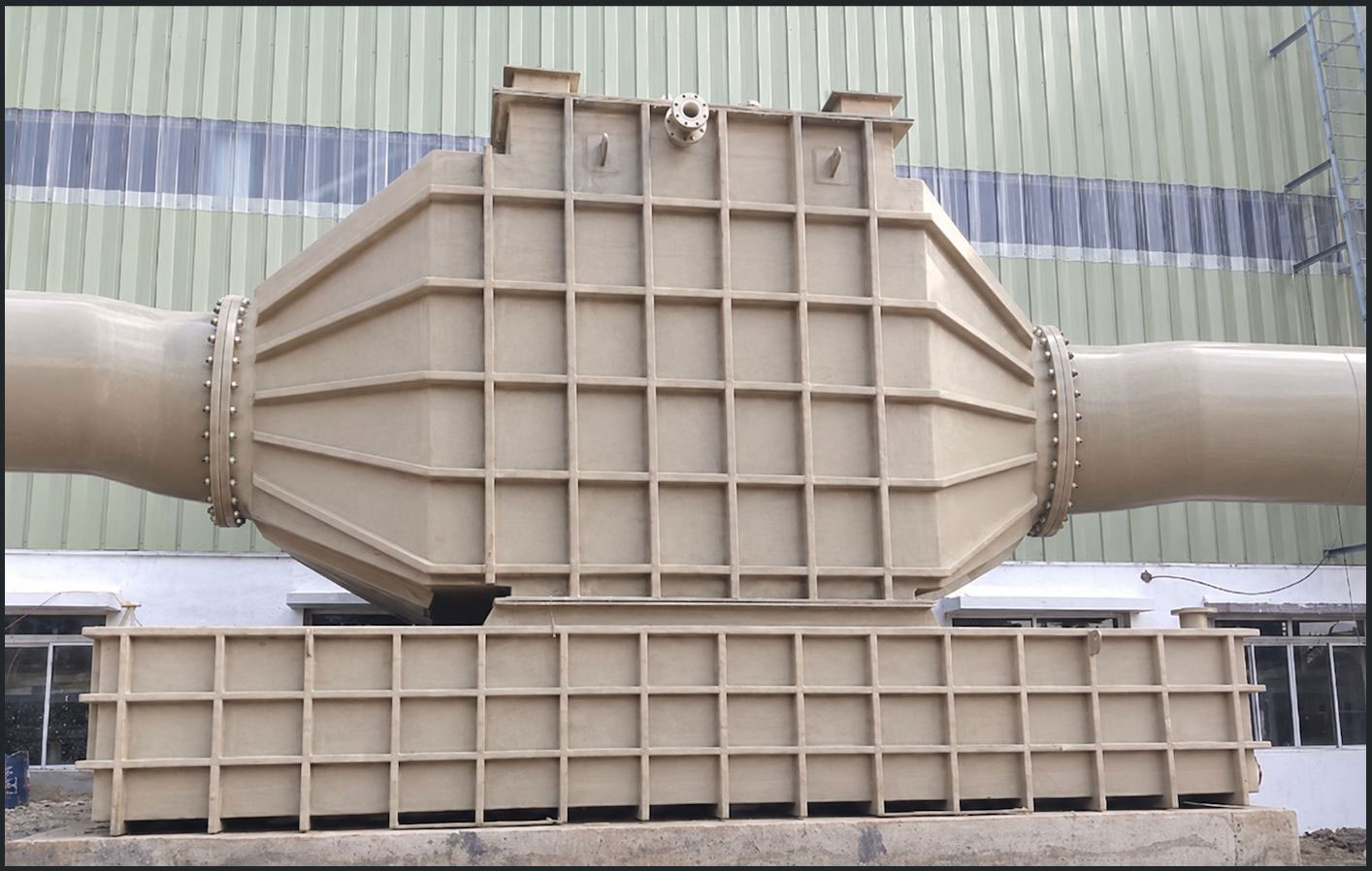
A well-built FRP tank or scrubber in the right service should run for twenty to thirty years. Plenty fail in five. When we are called in to look at a failed unit, the cause is almost never bad luck, and it is rarely the fibreglass itself. It is nearly always a decision made before the first layer of glass went down.
Here are the five we see most often, and what designs them out.
1. The resin was chosen for the chemical, not the service
Most specifications say something like "suitable for 33% HCl." That is a starting point, not a selection. The same acid behaves very differently at 40 °C than at 80 °C, with or without traces of chlorine, and at steady state versus during a hot cleaning cycle.
A general-purpose isophthalic resin that is perfectly happy with dilute hydrochloric acid at ambient temperature can blister and soften within a couple of years if the process runs hot or carries an oxidiser. The tank looks fine from outside right up to the point it weeps.
What designs it out: select the resin against the worst realistic condition — highest temperature, highest concentration, every trace component, and any cleaning chemical that will ever touch the surface. Then check that selection against the resin manufacturer's own chemical resistance data, not a generic table. Where the margin is thin, move up a resin family or add a thermoplastic liner.
2. The corrosion barrier was too thin, or never properly cured
An FRP laminate has two jobs, done by two different layers. The inner corrosion barrier — typically a resin-rich surfacing veil backed by chopped strand mat, around 2.5 to 3 mm thick — keeps the chemical away from the structure. The structural laminate behind it carries the load.
If the barrier is thin, or patchy at corners and nozzle joints, chemical reaches the structural glass. Glass fibres are attacked, the laminate loses strength from the inside, and nothing shows on the outside until it is far too late.
Cure matters just as much as thickness. An under-cured inner surface has far lower chemical resistance than the resin data sheet promises.
What designs it out: specify the barrier construction explicitly — veil type, number of mat layers, minimum thickness — rather than leaving it to the fabricator. Then verify it: Barcol hardness readings on the inner surface, an acetone sensitivity test for surface cure, and post-curing where the service demands it.
3. Stress was concentrated where the laminate is weakest
FRP is strong, but it does not yield the way steel does. Steel bends at a stress concentration and redistributes the load. FRP cracks.
The classic failure points are the same in almost every unit we inspect:
- Nozzles carrying the weight of pipework that should have been independently supported
- The knuckle where the shell meets a flat or dished bottom
- Support lugs and saddles that load a small area of shell
- Secondary bonds — any joint laminated onto an already-cured surface, which is only as strong as its surface preparation
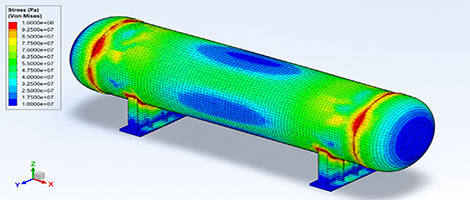
What designs it out: design the laminate for the actual loads at these points — nozzle loads from the piping engineer, wind and seismic loads, vacuum if a pump can ever pull one. Reinforce locally, support pipework separately, and specify how every secondary bond is prepared. Finite element analysis earns its cost here, because it shows where stress concentrates before a mould is made.
4. The equipment met conditions nobody told the designer about
A scrubber designed for 60 °C gas sees 110 °C during a process upset. A tank rated for atmospheric pressure is pulled into vacuum by a pump drawing it down too fast. A recirculation line carries grit that slowly erodes the inlet.
None of these show up in the design basis, so none of them are designed for.
What designs it out: ask about upsets, not just normal operation. What happens if the quench fails? Can this tank ever be pumped out with the vent closed? Is there any solid in the liquor? A few extra questions at enquiry stage are the cheapest reliability measure there is. Where an upset is possible, design for it — a temperature-rated resin, a vacuum-rated shell, or a protective interlock.
5. A good vessel was paired with the wrong blower
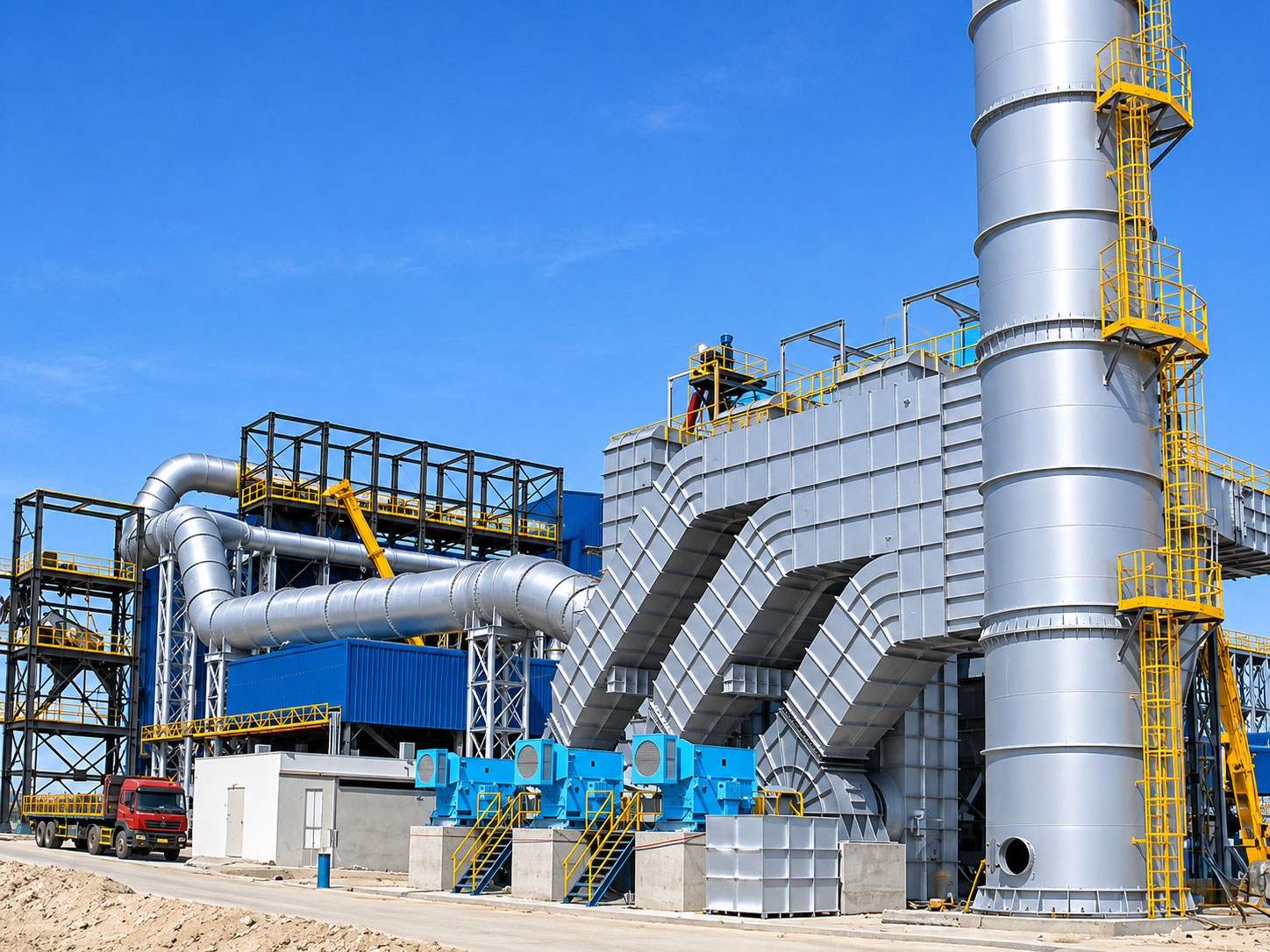
This one applies to scrubbers and exhaust systems. The tower is correctly designed, but the fan was chosen from a catalogue curve against a guessed system resistance. The system then runs off its design point: too little airflow means poor capture and failed emissions tests; too much means liquor carry-over and wet stacks.
The scrubber gets blamed. The cause was a fan selection made without the real pressure drop.
What designs it out: calculate system resistance properly — hoods, ducting, the scrubber, the mist eliminator and the stack — and select the blower against that, from a measured performance curve. We cover this in more detail in When the fan curve lies.
The common thread
None of these are fabrication problems. A skilled fabricator can build a flawless laminate with the wrong resin, to the wrong thickness, with a nozzle in the wrong place. Every failure here was decided at the design stage, which is exactly where it can be prevented cheaply.
That is why we size every system against a proper design basis, design laminates to a governing code such as BS EN 13121 or ASME RTP-1, verify the structure by analysis before prototyping, and test before anything leaves the plant.
If you are specifying FRP equipment, the most useful thing you can send a supplier is not a drawing. It is the full operating envelope — normal, upset and cleaning conditions included.